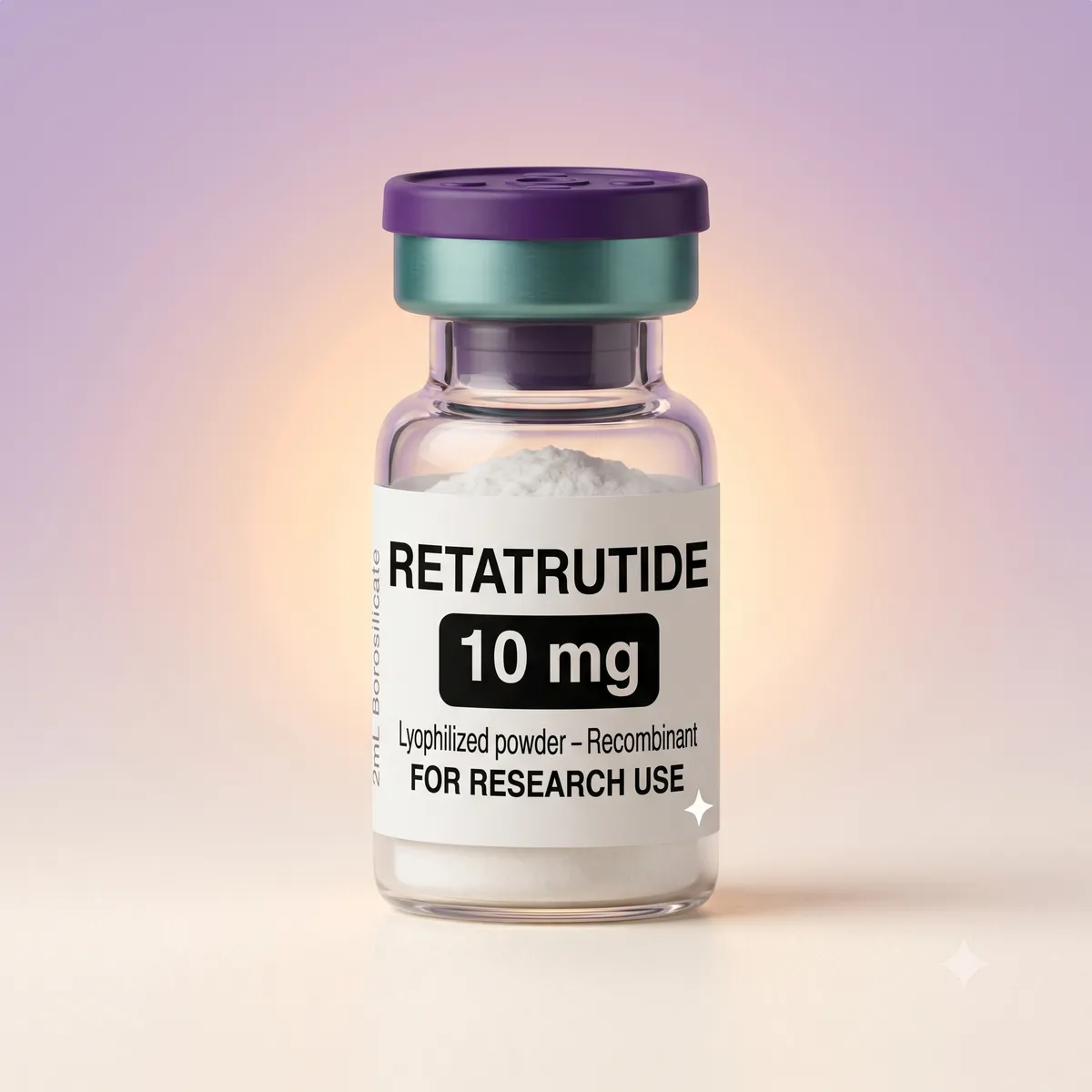
Walk into any gym today and you will hear it: whispers about BPC-157, TB-500, o growth hormone fragments. Peptides have become the latest "secret weapon" for muscle recovery, joint repair, and performance enhancement. Promoted by biohackers, YouTube "recovery experts," and influencers posing as science-backed authorities, peptides are everywhere.
And let's be honest: the hype is appealing.
The idea of injecting a compound that accelerates healing, rebuilds tissue, and gets you back to the gym faster sounds like a shortcut worth taking, especially when you are pushing yourself to the limit in training, dealing with nagging injuries, or chasing next-level performance.
But here is the truth: most people do not need peptides. And most importantly, most people do not understand what they really are.
Peptides are not magic. They are unregulated and often misunderstood compounds that work in very high-stress and very specific situations, not for general fitness routines. If your training, nutrition, sleep, and hormonal balance are not already optimized, you are skipping the foundational steps that make peptides even worth considering.
In this article, we will break down:
- What peptides really are (and what they are not).
- The real science behind their use for recovery.
- Why 95% of people can recover faster — and more safely — without them.
- What to use instead: legal, clinically dosed supplements that actually deliver results.
If you are serious about recovery, performance, and long-term gains, this is the smartest conversation you need to have.
What Are Peptides and Why Are They Trending?
Peptides are short chains of amino acids that act as signaling molecules in the body. They regulate everything from hormone production and inflammation to immune response and tissue repair. It sounds powerful, and they are. But not all peptides are created equal, and not all are appropriate (or safe) for general fitness use.
Common Types of Peptides in Fitness Culture:
- BPC-157: a synthetic peptide claimed to accelerate soft tissue and joint repair.
- TB-500: believed to promote muscle and tendon recovery.
- CJC-1295 and Ipamorelin: used to stimulate growth hormone release.
- GHK-Cu: promoted for wound healing and skin regeneration.
Most of these are not FDA-approved for human use. They are sold as "research chemicals" — often in powder or injectable form — through unregulated online sources. That means there is zero oversight on purity, dosage accuracy, or safety.
So why are they everywhere?
Because the fitness industry loves shortcuts. Peptides promise rapid recovery, fewer injuries, and better performance without the stigma of steroids. And in a social media world where results are everything, that promise spreads fast — usually faster than the science can keep up.
The real problem: very few users truly understand what these compounds do, how they work, or what the long-term risks look like.
Clinical Insight: "Peptides like BPC-157 y TB-500 have shown promising effects on tissue regeneration in animal studies. However, human trials are lacking, and dosing strategies remain speculative at best." — Chan, M.K.S. et al. (2024).
That is the difference between hype and evidence. And that is where we are going now.
The Problem with Peptides: More Risk Than Reward?
There is a reason peptides are not sold at supplement counters or found in professional sports nutrition protocols: most of them exist in a legal and clinical gray zone. That matters, because when you put something in your body to manipulate recovery, hormones, or cellular repair, you better know exactly what you are dealing with.
And with peptides, most people do not.
Here is why they are a risky bet — especially for everyday lifters, athletes, and fitness-oriented professionals.
1. Unregulated and Questionable Sourcing
Most peptides on the market are sold as research chemicals, not as approved dietary or therapeutic supplements. That means they are manufactured in underground or offshore labs, often without quality control, dosage oversight, or safety verification. Purity can vary dramatically from batch to batch. In a test conducted by a U.S. compounding pharmacy, over 60% of commercial peptide products contained contaminants or were underdosed. That is not just a waste of money — it is a serious health risk.
2. Lack of Long-Term Safety Data
Most peptide research has been conducted in animals or in very specific clinical contexts — such as wound care or post-surgical healing. There is little to no peer-reviewed data on the long-term effects of peptide use in healthy athletes, let alone in gym-goers casually injecting BPC-157 because their shoulder is a bit sore. This is experimentation — not optimization.
3. Inconvenience and Compliance
Peptides are not "pop a pill" supplements. Most require daily subcutaneous injections, temperature-controlled storage, and careful dosing protocols that — if mishandled — can lead to inefficacy or adverse effects. For most users, that is unsustainable. Compare that to a scoop of creatine, a bedtime dose of ZMT, or a clinically backed testosterone booster — and the risk/reward equation becomes very simple.
4. Cost vs. Return
Let's talk money. A full 8-12 week protocol of BPC-157 o TB-500 — even assuming pharmaceutical-grade sourcing — can cost $300 to $500+ per cycle. And for what? Slightly faster healing on an elbow nuisance that would have recovered in 3 weeks with proper sleep and nutrition? This is where logic dies and hype takes over. Most people chasing peptides are not broken. They are under-recovered, under-fed, over-stressed, and misinformed. What they need is not a research chemical — it is a system that supports natural recovery, real hormonal balance, and sustainable performance.
You Probably Do Not Need Peptides — Here Is Why
Let's be honest: most people looking at peptides are not elite-level athletes, professional bodybuilders, or under medical supervision. They are everyday lifters, weekend warriors, or physique-focused individuals trying to solve a recovery problem that does not require a needle.
If you are training hard but not seeing results, chances are peptides are not your missing link. What is? The basics.
You don't need peptides if:
- ❌ You are not sleeping 7-9 hours every night.
- ❌ You are not managing stress or cortisol.
- ❌ You are inconsistent with your training split.
- ❌ Your hydration and nutrition are not dialed in.
- ❌ You are skipping proven supplements like creatine or beta-alanine.
- ❌ Your testosterone is tanked and you have not addressed it.
Peptides are not a fix for a broken lifestyle. They are a fine-tuned intervention — and if the basics are not locked in, their effects are minimal at best. You are putting expensive injectable fuel in an underperforming engine.
Here is the trick: you can recover faster, train harder, and feel better without the cost, risk, or complexity of peptides — if you build the right system around natural tools that work.
We are talking about:
- Creatine for cellular energy and recovery.
- Beta-alanine for muscular endurance.
- Tongkat Ali and Ashwagandha for testosterone support and cortisol control.
- Estrogen balance support.
- And of course, sleep — the real anabolic window.
Get these pieces right and you will unlock 80-90% of what peptides claim to do, without suppressing your system, breaking your wallet, or taking medical risks you are not prepared for.
You don't need to inject your way out of underperformance. You need to fix the foundation — and that starts now.
What to Use Instead: Proven Supplements for Recovery and Performance
If you are trying to optimize recovery, boost performance, and stay in the game longer — you don't need risky injectable peptides. You need the basics, executed flawlessly. That means clinically validated supplements with decades of research, real-world results, and no legal gray zones or questionable sourcing.
Here is what actually works — and why:
Creatine Monohydrate
Still the gold standard. Creatine increases phosphocreatine stores in muscle tissue, increasing ATP availability for explosive effort and faster recovery between sets. It also improves muscle cell hydration and promotes lean mass retention over time.
In short: you will lift heavier, recover faster, and build more size — all backed by over 1,000 human trials.
Beta-Alanina
Beta-alanine buffers lactic acid buildup by increasing carnosine levels in muscle tissue. That means less fatigue, more reps, and improved performance in the hypertrophy sweet spot (60–240 seconds per set).
Research confirms that consistent use increases total volume and training capacity — two of the biggest drivers of muscle growth and conditioning.
Hormonal and Sleep Support (ZMA, Tongkat Ali)
Your all-in-one sleep, testosterone, and recovery formula. Includes:
- Tongkat Ali to elevate free testosterone and reduce cortisol.
- Ashwagandha for hormonal balance and sleep depth.
- Zinc, Magnesium, and Melatonin for REM optimization and whole-body restoration.
These ingredients do not just support hormonal balance — they give your body the tools to rebuild muscle tissue while you sleep, the true anabolic window.
Natural Estrogen Blockers
Peptides do not address estrogen — but if you are training hard and trying to optimize testosterone, you need to.
Supplements designed to support a healthy testosterone-to- estrogen ratio, reduce water retention, and fine-tune body composition.
None of these require a needle. None compromise your health. And all are clinically dosed and proven. You do not need research chemicals to recover better. You need a smarter, safer, science-driven stack.
When Peptides Might Make Sense (But Probably Not Yet)
Let's be clear: peptides do have a place — but it is a narrow one. And for 99% of people reading this, they are not the answer.
Where peptides might be appropriate:
- Clinical rehabilitation or injury recovery under medical supervision (e.g.: post-surgical tendon repair, major joint trauma).
- Elite-level athletes with high-level sports medicine teams.
- Physician-guided hormone therapy involving growth hormone-releasing peptides or specific medical peptides.
- Individuals in experimental medical trials or off-label therapeutic use under the care of an endocrinologist or regenerative medicine specialist.
In those scenarios, the stakes are different. Supervision is real. The peptide is not being sourced from a sketchy website, mixed in someone's kitchen, and injected based on a Reddit dosing protocol.
But for the average athlete, lifter, or weekend warrior — peptides are an overkill at best, and dangerous at worst.
Most people are not recovering poorly because they lack synthetic healing factors. They are recovering poorly because they skip meals, don't sleep, push volume without deloads, ignore cortisol, or train in a state of chronic stress.
Peptides won't fix bad programming, bad habits, or missing recovery tools. And that is the truth.
Want better recovery? Don't inject something you barely understand. Build a system that supports your performance from the ground up.
Conclusion — Fix the Basics Before Injecting Anything
You do not need to play chemist to recover better. You do not need unregulated peptides with unclear doses, unknown risks, and no long-term safety data to feel stronger, heal faster, or train harder.
What you need is a better system — built on consistency, science, and fundamental recovery tools that work.
Most people looking at peptides haven't even optimized the basics:
- Nutrition is not dialed in.
- Sleep is inconsistent.
- Training is poorly programmed.
- Hormones are imbalanced.
- Stress is unmanaged.
Peptides may feel like the next step. But for 95% of people, they are not. They are a distraction — a way to avoid hard decisions and proven strategies in favor of a shortcut that rarely pays off.
The Vital Boost Philosophy
Vital Boost was built for serious athletes who want real results. That means clinically dosed, research-backed supplementation designed to improve recovery, performance, and long-term progress — not risk your endocrine health.
So skip the questionable injections. Fix your foundation.
View Catalog (Advanced Only) Expert Consultation